


 Deutsch
 English
 Español
 Français
 Nederlands
 Português


 Share
Share




China's 2026 Rare Earth Export Controls: How Critical Mineral Weaponization Is Reshaping Global Supply Chains
China's 2026 export controls on rare earths and critical minerals have triggered price spikes of up to sixfold outside China, with European licensing approval rates falling below 25% in key sectors. Over 80% of European companies depend on Chinese supply chains for materials essential to defense, electric vehicles (EVs), and renewable energy. This analysis examines how Beijing is weaponizing control rather than scarcity — using reversible restrictions to maintain pricing power and extract strategic concessions — while Western nations face a rapidly closing 12-to-18-month window to build viable alternatives or accept prolonged strategic vulnerability.
Background: China's Dominance in Rare Earths
China has long dominated the global rare earth market, supplying around 90% of demand for the 17 rare-earth powders as of 2019, according to Wikipedia. The country's control extends beyond mining to processing and refining, giving it an effective stranglehold on the supply chain. Since 2010, Beijing has periodically placed restrictions on rare earth exports, but the 2025-2026 escalations represent a significant intensification. The US-China trade war under President Donald Trump in 2025 prompted further Chinese restrictions, accelerating a trend that now threatens Western industrial bases.
The term 'rare-earth' is a misnomer — these elements are not actually scarce but are difficult to isolate and purify. China's advantage lies not in reserves (Brazil has the second-largest reserves, and the US and Australia are top producers) but in its integrated processing infrastructure. This gives Beijing unique leverage: it can restrict supply without depleting its own resources, creating a weapon of reversible economic coercion.
How the 2026 Controls Work
Licensing and Approval Rates
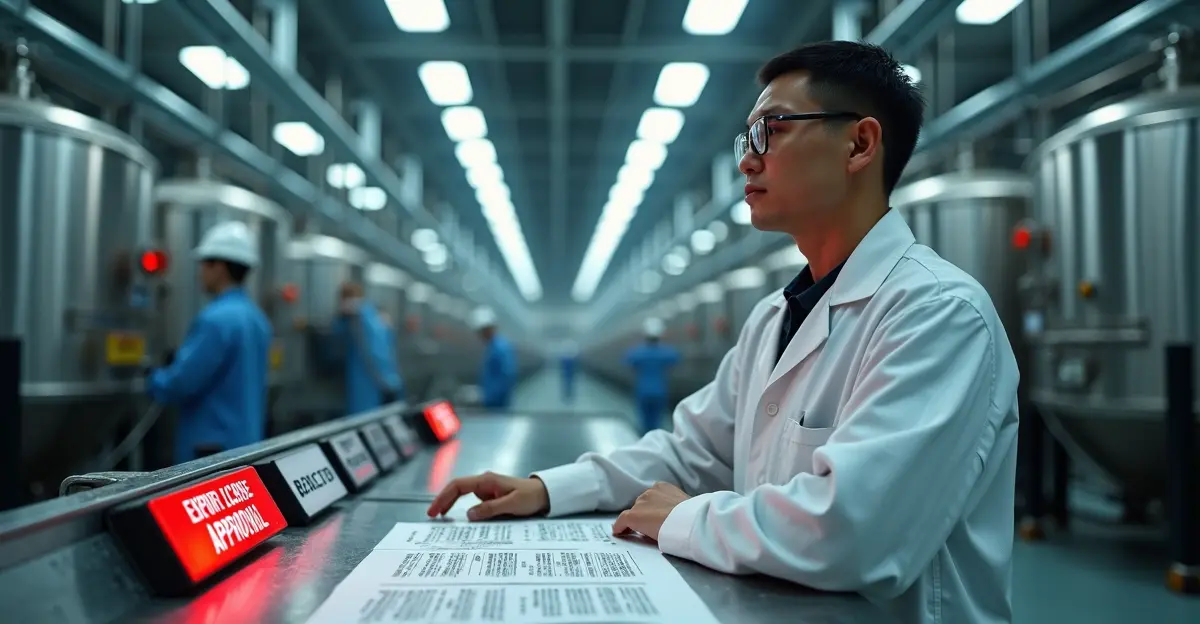
China's 2026 export control regime requires foreign buyers to obtain licenses for a broad range of rare earth elements and critical minerals, including neodymium, praseodymium, dysprosium, and terbium — all essential for permanent magnets used in EV motors, wind turbines, and defense systems. European licensing approval rates have reportedly fallen below 25% for key industrial sectors, effectively halting many projects. The European Union's critical minerals strategy has struggled to keep pace, with domestic processing capacity years away from meaningful output.
Price Spikes and Market Impact
Outside China, prices for rare earth oxides have surged up to sixfold since early 2025. Neodymium-praseodymium (NdPr) oxide, a benchmark material, jumped from around $80 per kilogram in 2024 to over $480 per kilogram in early 2026, according to industry data. Dysprosium oxide, used in high-temperature magnets, saw even steeper increases. These price spikes ripple through supply chains, raising costs for EV manufacturers, wind turbine producers, and defense contractors.
Weaponization Through Reversible Restrictions
Beijing's strategy is not about permanent scarcity but about maintaining pricing power and extracting strategic concessions. By making restrictions reversible, China can tighten or loosen supply in response to geopolitical developments. This approach, sometimes called 'critical mineral weaponization,' allows China to punish adversaries without triggering irreversible supply chain shifts. For example, when the US imposed tariffs on Chinese goods in 2025, Beijing responded by tightening rare earth export licenses. When negotiations progressed, licenses were quietly approved again.
The World Economic Forum's Global Risks Report 2026 identifies geoeconomic confrontation as the top global risk, underscoring how critical minerals have become a central battleground. The report notes that 'weaponized interdependence' — where countries use control over key resources to exert influence — is now a defining feature of international relations.
Impact on European and Western Industries
Defense Sector Vulnerability
European defense contractors rely heavily on Chinese rare earths for permanent magnets in guidance systems, radar, and precision munitions. With licensing approval rates below 25%, some companies have reported production delays of 6-12 months. The NATO defense supply chain risksglobal critical minerals race




Follow Discussion